
Editorial Team · on 14 June 2026 · 8 min read · Last reviewed 14 June 2026
Upcycling is the creative process of transforming old or unwanted materials, like t-shirts, into new, useful products of higher quality or value.
Key facts
- Upcycling reduces textile waste, with approximately 85% of textiles ending up in landfills annually.
- A single t-shirt requires about 2,700 liters of water to produce, making upcycling an eco-friendly alternative.
- Upcycled t-shirt projects range from beginner to advanced, catering to all skill levels.
- Common upcycling techniques include cutting, sewing, dyeing, and painting.
Why should I upcycle t-shirts?
Upcycling t-shirts offers numerous benefits, both for the environment and your wardrobe. By reusing old t-shirts, you actively participate in reducing textile waste. The fashion industry contributes significantly to pollution and waste, and upcycling is a simple way to mitigate this impact.
From a personal perspective, upcycling allows you to create unique, customized pieces that reflect your style. Instead of buying new clothes, you can give old t-shirts a new life with minimal investment. This not only saves money but also encourages creativity and self-expression.
Moreover, upcycling t-shirts can help you declutter your wardrobe. Many people have old t-shirts they no longer wear but can’t bear to throw away. Upcycling provides a practical solution to this dilemma, turning unwanted items into something useful and beautiful.
What materials do I need to start upcycling t-shirts?
The materials needed for upcycling t-shirts vary depending on the project. However, some basic supplies include scissors, needles, thread, fabric glue, and markers for designing. For more advanced projects, you might need a sewing machine, fabric paint, or dye.
If you’re new to upcycling, start with simple projects that require minimal materials. For example, turning an old t-shirt into a tote bag only requires scissors and basic sewing skills. As you gain confidence, you can explore more complex projects that involve additional materials and techniques.
You can find most of these materials at local craft stores or online. Additionally, many upcycling projects can be completed with items you already have at home, making it an accessible and cost-effective hobby.
What are some easy upcycling t-shirt ideas for beginners?
If you’re new to upcycling, start with simple projects that don’t require advanced skills or materials. One popular idea is turning an old t-shirt into a tote bag. This involves cutting the sleeves and neckline, sewing the bottom hem, and adding handles made from the remaining fabric.
Another easy project is creating a headband or scrunchie. Cut the hem off the t-shirt, stretch the fabric to create a tube, and then sew or glue the ends together. You can also make a simple tank top by cutting the sleeves and neckline of an old t-shirt and hemming the edges.
For a more decorative project, try tie-dyeing or fabric painting. These techniques allow you to add color and patterns to old t-shirts, giving them a fresh, new look. You can find tutorials online that guide you through the process step-by-step.
How can I upcycle t-shirts into trendy fashion pieces?
Upcycling t-shirts into trendy fashion pieces is a great way to stay stylish while being eco-friendly. One popular trend is creating off-shoulder tops or crop tops. These can be made by cutting the neckline and sleeves of an old t-shirt and then sewing or tying the edges to create the desired shape.
Another trendy idea is turning a t-shirt into a skirt. This involves cutting the sleeves and neckline, sewing the bottom hem, and adding an elastic waistband. You can also create a ruffled skirt by cutting the t-shirt into strips and sewing them together to form a circular shape.
For a more unique look, try upcycling a t-shirt into a vest or jacket. This can be done by cutting the sleeves and neckline, adding a zipper or buttons, and lining the inside with another fabric. These projects require more advanced sewing skills but result in a one-of-a-kind piece.
Think of upcycling like giving your old t-shirt a makeover. Just as you would update your hairstyle or outfit to keep up with trends, upcycling involves transforming an old item into something new and fashionable. It’s a creative way to breathe new life into something you might otherwise throw away.
How do I care for upcycled t-shirt creations?
Caring for upcycled t-shirt creations is similar to caring for regular clothing. Always check the care instructions on the original t-shirt label and follow them accordingly. Most upcycled items can be machine washed on a gentle cycle and tumble dried on low heat.
However, if you’ve used fabric paint or dye, it’s best to hand wash these items to preserve the colors and designs. Avoid using harsh detergents or bleach, as these can damage the fabric and cause colors to fade. Instead, opt for mild, eco-friendly detergents that are gentle on both the fabric and the environment.
When storing upcycled t-shirt creations, make sure to keep them in a cool, dry place away from direct sunlight. This will help prevent colors from fading and fabric from deteriorating. Additionally, avoid hanging heavy items on delicate upcycled pieces, as this can cause stretching or damage.
Upcycling vs. Recycling: What’s the difference?
While both upcycling and recycling help reduce waste, they differ in their processes and outcomes. Upcycling involves transforming old materials into new, useful products of higher quality or value. This process often requires creativity and manual labor to achieve the desired result.
Recycling, on the other hand, involves breaking down old materials into their raw components and using them to create new products. This process is typically done on an industrial scale and requires specialized equipment and facilities. The resulting products are often of lower quality than the original materials.
To illustrate the difference, consider the following table:
How can I share my upcycled t-shirt creations with others?
Sharing your upcycled t-shirt creations with others is a great way to inspire and encourage others to embrace sustainable fashion. You can start by showcasing your creations on social media platforms like Instagram, Pinterest, or Facebook. Use relevant hashtags to reach a wider audience and connect with other upcycling enthusiasts.
You can also participate in local craft fairs, markets, or upcycling workshops to share your creations and connect with like-minded individuals. These events provide an opportunity to learn from others, exchange ideas, and gain inspiration for future projects.
If you’re feeling ambitious, consider starting a blog or YouTube channel dedicated to upcycling t-shirts. Share tutorials, tips, and behind-the-scenes looks at your creative process. This not only helps others learn about upcycling but also establishes you as an authority in the field.
What are some advanced upcycling t-shirt techniques?
Once you’ve mastered the basics of upcycling t-shirts, you can explore more advanced techniques to create unique and intricate designs. One such technique is appliqué, which involves sewing or gluing fabric shapes onto the surface of a t-shirt to create patterns or images.
Another advanced technique is embroidery, which adds decorative stitching to the surface of a t-shirt. This can be done by hand or with a sewing machine, and the results can be stunning and intricate. Embroidery allows you to personalize your upcycled creations and add a touch of elegance and sophistication.
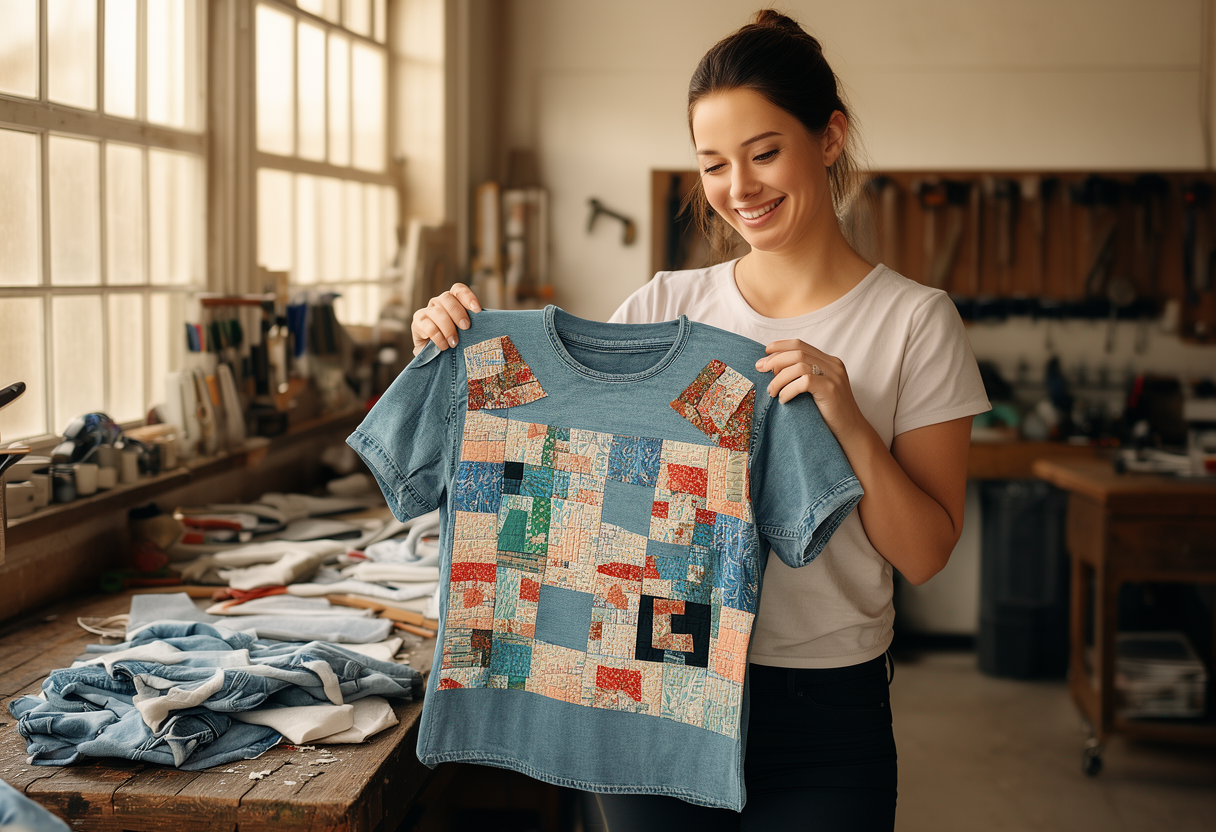
For those with sewing experience, you can also try creating patchwork designs by cutting old t-shirts into smaller pieces and sewing them together to form a new fabric. This technique allows you to mix and match different patterns and colors to create a truly one-of-a-kind piece.
How do I choose the best t-shirts for upcycling?
Not all t-shirts are created equal when it comes to upcycling. The best t-shirts for upcycling are those made from natural fibers like cotton or linen, as these fabrics are easier to work with and more sustainable. Avoid t-shirts made from synthetic materials like polyester, as these can be difficult to sew and may not hold up well to the upcycling process.
Additionally, choose t-shirts that are in good condition and free from stains, holes, or excessive wear. While upcycling can help hide minor imperfections, it’s best to start with a clean, intact t-shirt to ensure the best results. If you’re unsure about the quality of a t-shirt, give it a thorough inspection before beginning your upcycling project.
The following table provides a quick reference for choosing the best t-shirts for upcycling:
Where can I find inspiration for upcycling t-shirt projects?
Inspiration for upcycling t-shirt projects can be found everywhere, from social media platforms to craft blogs and online forums. Follow upcycling enthusiasts and sustainable fashion brands on Instagram, Pinterest, and Facebook to discover new ideas and trends.
You can also join online communities and forums dedicated to upcycling and sustainable fashion. These platforms provide a wealth of knowledge and inspiration, as well as an opportunity to connect with like-minded individuals and share your own creations.
For more in-depth inspiration, explore craft blogs and websites that specialize in upcycling and DIY fashion. These resources often feature step-by-step tutorials, project ideas, and expert tips to help you get started on your upcycling journey.
To get started with your upcycling journey, follow these simple steps:
- Gather old t-shirts and other materials you have on hand.
- Research and choose a project that suits your skill level and interests.
- Follow step-by-step tutorials or guidelines to complete your project.
- Share your creations with others and inspire them to embrace sustainable fashion.
Upcycle your old t-shirts today and contribute to a more sustainable future while expressing your unique style.
Frequently asked questions
What are some simple upcycling ideas for old T-shirts?
Transform old T-shirts into reusable tote bags by cutting off the sleeves and neckline, then sewing or tying the bottom. Create headbands by cutting strips from the hem and braiding them. For a quick project, turn a T-shirt into a pillowcase by cutting off the sleeves and seams, then stuffing it with filling.
How can I upcycle T-shirts into new clothing?
Turn a T-shirt into a tank top by cutting off the sleeves and neckline. Create a crop top by cutting the bottom and hemming it. For a no-sew option, tie-dye or bleach patterns onto the shirt for a unique design. Use fabric glue to attach patches or other fabric pieces for added flair.
What household items can I make from old T-shirts?
Make cleaning rags by cutting old T-shirts into squares. Create a rug by braiding strips of fabric and sewing them together. Use T-shirt fabric to make reusable produce bags by sewing the strips into a mesh-like material. Turn T-shirts into quilt squares for a cozy, upcycled blanket.
How do I prepare T-shirts for upcycling?
Wash and dry the T-shirts to remove any dirt or odors. Lay them flat and use fabric scissors to cut off sleeves, necklines, or other unwanted parts. If sewing, use a universal needle and polyester thread for durability. For no-sew projects, fabric glue or fusible web can be used to attach pieces.